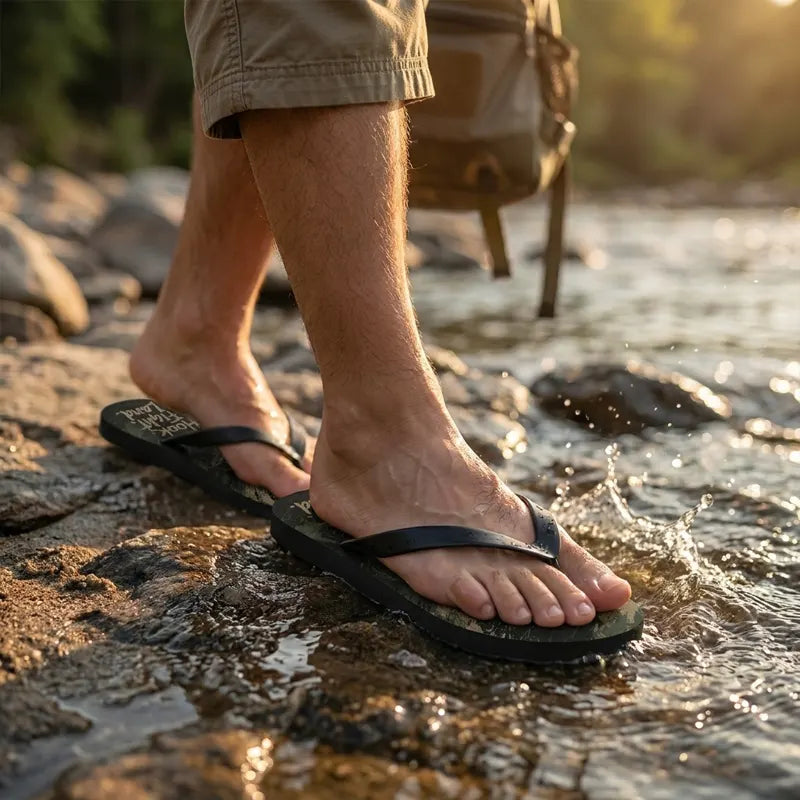
Fishing Flip Flops: What Actually Keeps You From Slipping on Deck
Picture this: you're on the bow of a boat at dawn, rod in hand, waiting for that first bite of the day. The deck is slick with morning dew and fish slime. You take a step - and your foot goes nowhere because you chose the right footwear. That's the power of a great pair of fishing flip flops.
Some anglers search for them under different names — "fish flip flops," "fishing slippers," or simply the best shoes for fishing on a boat — but the goal is always the same: footwear that won't betray you the moment the deck gets wet.
For years, anglers treated flip flops as an afterthought - something you wore to the beach, not serious fishing. But that mindset has shifted. Modern fishing flip flops (also marketed as fish flip flops slippers) are engineered with aggressive non-slip soles, quick-drying straps, and arch support that rivals dedicated boat shoes. The best ones give you dock-deck confidence without sacrificing the barefoot feel that makes flip flops so popular.
In this guide, we break down everything you need to know about choosing flip flops and fishing slippers for fishing - from traction technology to materials that survive saltwater, and how to pair them with your favorite fishing apparel from Fathom Thread for a complete on-water look.

Why Regular Flip Flops Fail on the Water
Not all flip flops are created equal - and the cheap foam pairs from a gas station are genuinely risky on a wet boat deck. Here's why generic flip flops don't hold up as real shoes for fishing on a boat:
The Slip Hazard Is Real
Wet fiberglass and aluminum decking, combined with fish slime and morning dew, creates a genuinely treacherous surface. Standard EVA foam soles with minimal tread pattern offer almost zero grip when wet - it's the same principle as tire tread on a wet road. If water can't escape from under your foot, you're effectively hydroplaning.
Material Breakdown in Saltwater
Cheap synthetic straps deteriorate rapidly when exposed to saltwater, UV radiation, and sunscreen chemicals. Within a season, the foam compresses, straps crack, and the footbed becomes a breeding ground for odor-causing bacteria.
Lack of Support for Long Days
Standing on a pitching boat or walking along rocky shorelines for 6-8 hours demands arch support and cushioning that basic flip flops simply don't provide. Poor support leads to plantar fasciitis, knee strain, and lower back fatigue - especially on multi-day fishing trips.

What Makes a Great Fishing Flip Flop
When you're shopping for flip flops, fish flip flops, or fishing slippers that can handle real fishing conditions, here are the features that separate the pros from the disposables:
1. Non-Slip Sole Pattern and Compound
- Siped or channeled tread patterns - Grooves that cut through water and create suction-like grip on wet surfaces. Razor-cut or wave-pattern soles perform best on fiberglass and aluminum decks.
- Rubber or high-density EVA compound - Softer rubber provides better grip but wears faster. Look for a blended compound (rubber heel pad with EVA forefoot) that balances traction and durability.
- Multi-directional tread - You're not just walking forward. You're pivoting, casting, reeling, and bracing against boat motion. A sole that grips in all directions is essential.
- Closed-toe or reinforced toe options - Some anglers prefer a toe bumper to protect against dropped tackle, hooks, and hot boat surfaces - a feature more common in men's fish shoes built for heavier-duty use.
2. Quick-Dry, Saltwater-Resistant Materials
- Straps: Marine-grade rubber or nylon webbing - These resist UV degradation, dry quickly, and don't absorb salt or odor.
- Footbed: Open-cell or textured EVA - Textured surfaces provide grip even when your feet are wet. Some premium options feature antimicrobial treatments to prevent bacteria growth.
- Drainage channels - Small perforations or channels in the footbed let water escape quickly, reducing sloshing and blister risk.
3. Arch Support and Footbed Contour
- Metatarsal support - A slight rise under the ball of the foot reduces fatigue during long standing sessions.
- Heel cup - A subtle depression in the heel area stabilizes your foot and prevents sliding on angled surfaces.
- Dual-density footbed - Firmer arch support with softer cushioning under the heel and forefoot gives the best of both worlds.

Best Flip Flops by Fishing Scenario
Different fishing environments demand different footwear. Here's how to match your flip flops or fish flip flops to your fishing style:
Boat Deck Fishing – The Truest Test of Shoes for Fishing on a Boat
Priority: Maximum traction, toe protection, and stability on a moving platform.
When you're on a boat - especially a center console or flats boat - the deck surface is usually textured fiberglass or painted aluminum, both of which become extremely slick when wet. You need flip flops with the deepest siped tread and a rubber heel pad for extra grip. Closed-toe designs or flip flops with reinforced toe bumpers protect against dropped tackle boxes, sinkers, and hook points. If you're specifically hunting for the best shoes for fishing on a boat, this is the traction spec to prioritize above everything else.
Pro tip: Many charter captains now require non-marking soles to protect boat finishes. Always check before boarding a new vessel. Pair your footwear with a UPF-rated fishing shirt from the sun protection collection - because on open water, the sun reflects off both the surface and the deck.
Dock and Pier Fishing
Priority: Comfort for long standing sessions and grip on wood, concrete, or metal surfaces.
Dock fishing means long hours in one spot. You're standing on wood planks (often slippery with algae), concrete (brutal on joints), or metal grating (which can snag poor sole designs). Here, arch support is king. A contoured footbed with real arch structure will save your feet on those marathon dock sessions.
Wooden docks in particular develop a green algae film that's deceptively dangerous. Look for flip flops with a tread pattern deep enough to cut through that film and make solid contact with the wood underneath. Quick-dry materials are equally important - a splash from a jumping fish or an unexpected wave can soak your feet in seconds.
For dock days, consider layering your outfit. A pair of quick-dry fishing shorts from the shorts collection and a trucker hat from Fathom Thread's collection complete the practical, on-brand look that says you take your fishing seriously. Not sure what to look for in a pair of shorts? Our shorts pants for anglers guide covers breathable fabrics and fit.
Shore and Surf Fishing
Priority: Durability on rough terrain, protection from sharp objects, and sand resistance.
Shore fishing puts your footwear through the most abuse. You're walking on shell beds, sharp rocks, driftwood, and hot sand. Flip flops here need a thicker, more protective sole (at least 15-20mm) and durable strap construction. Some surf anglers prefer hybrid sandal designs with a heel strap for extra security when wading.
Sand gets everywhere, so drainage and easy rinse-off capability matter. After a day in the surf, rinse your flip flops with fresh water to remove salt crystals that accelerate material breakdown.

The Salt Hunter Tide Chaser Flip Flops - built for dock-to-beach comfort with an offshore-inspired design, from $22.95.
Beach and Casual Fishing
Priority: Versatility, style, and adequate grip for mixed conditions.
If you're the type of angler who fishes from the beach, wades in the shallows, then grabs lunch at the marina - you need a versatile pair. Look for flip flops that transition well from sand to paved surfaces to boat decks without looking out of place anywhere. A clean, simple design in earth tones or ocean colors works well and pairs naturally with fishing-themed apparel.
Speaking of style, Fathom Thread's t-shirt collection is designed with the same philosophy: gear that performs on the water but looks great at the restaurant afterward. A custom fishing tee paired with solid flip flops is the quintessential casual angler uniform.
How to Coordinate Flip Flops with Fishing Apparel
Your footwear is part of your overall fishing aesthetic - and looking the part matters more than most anglers admit. Here's how to build a cohesive fishing outfit:
The Color Coordination Rule
Match your flip flops to one accent color in your outfit. If your fishing polo features a bold bass graphic, wear navy or slate flip flops. If you're rocking earth-toned camo, go with tan or brown. This creates a pulled-together look without being matchy-matchy.

Bass Fury Apex Angler - also available as Hawaiian shirt, polo long sleeve, and hoodie, from $20.99.
Build the outfit around one personalized piece
Personalize with your name, lake, or coordinates - made to order and shipped in 3-5 days.
Shop Flip Flops →Free shipping over $65 · 30-day money-back · 10% off your first order
The Performance Layering System
A proper fishing outfit works in layers, and your flip flops are the foundation:
- Base layer: Quick-dry flip flops or water sandals
- Bottom: Lightweight fishing shorts or convertible pants
- Top: UPF-rated fishing shirt or performance tee
- Accessories: Polarized sunglasses, trucker hat or bucket hat, and neck gaiter - or, if you'd rather keep both hands free while wading and casting, a sling bag for anglers instead of a bulky tackle vest
Each layer should dry quickly, resist sun damage, and allow full range of motion for casting and reeling. When every piece shares those properties, you can transition from boat to shore to restaurant without changing.
Safety Tips for Wearing Flip Flops While Fishing
Flip flops are great for many fishing scenarios, but safety should always come first. Follow these guidelines:
When to Wear Them - and When Not To
- YES: Dock fishing, casual boat fishing on calm days, beach and shore fishing in warm weather, wading in shallow water.
- NO: Offshore fishing in rough seas, deep-water wading (where a flip flop could come off), icy conditions, or any situation where you need ankle support or full foot protection - this is where dedicated men's fish shoes with closed toes take over.
- MAYBE: Kayak fishing - depends on the kayak design and your comfort level. Some kayak anglers prefer water shoes for pedal drive systems.
Essential Safety Practices
- Always test your grip before committing weight. Step lightly on a wet surface first, shift your weight gradually, and confirm traction before walking normally.
- Keep a spare pair of boat shoes on board. If conditions deteriorate or you need to handle heavy gear, having closed-toe shoes as a backup is smart planning.
- Never run on a wet deck. This applies regardless of footwear, but it's especially critical in flip flops where your foot has less secure attachment to the sole.
- Check your soles regularly for wear. Once the tread pattern is worn smooth, it's time to replace - no matter how comfortable they still feel.
- Watch for hooks on the ground. Dropped hooks are a real hazard on any fishing platform. Flip flops offer zero puncture protection, so always scan your footing area.
The most common preventable injury on a boat is a slip-related fall - good traction underfoot, in flip flops or closed shoes, meaningfully lowers that risk. Most people don't realize their flip flops have lost grip until they're already on the ground, so replace them proactively rather than waiting for a close call.
Fishing Flip Flop Care and Maintenance
A good pair of fishing flip flops is an investment. Extend their lifespan with these care tips:
After Every Use
- Rinse with fresh water - Salt crystals are abrasive and accelerate material breakdown. A quick hose-down after each saltwater outing adds months to your flip flops' life.
- Air dry in shade - Direct sunlight degrades rubber and foam over time. Dry them under a shaded area, not in direct sun.
- Check for debris - Small stones, shell fragments, and tangled fishing line can work into tread patterns and footbeds. Pick them out before storage.
Monthly Deep Clean
- Soak in warm water with mild dish soap for 10-15 minutes.
- Scrub with a soft-bristle brush, focusing on tread grooves and strap attachment points.
- Rinse thoroughly and air dry.
- For odor, sprinkle baking soda on the footbed, let sit for an hour, then brush off.
When to Replace
Even the best fishing flip flops have a finite lifespan. Replace when you notice:
- Tread pattern is worn smooth (especially in the heel strike zone)
- Straps are stretched, cracked, or separating from the footbed
- Footbed compression has flattened the arch support
- Persistent odor that doesn't resolve with cleaning (bacterial colonization)
Most anglers who fish weekly should plan to replace their primary pair every 12-18 months of regular use.
Common Mistakes Anglers Make with Fishing Footwear
Mistake #1: Prioritizing Price Over Traction
A cheap pair of flip flops from the checkout rack might seem like a bargain, but if they can't grip a wet boat deck, they're worse than useless - they create a false sense of security. Invest in footwear designed for wet-surface traction.
Mistake #2: Ignoring Fit and Sizing
Flip flops that are too large will flop around and reduce control. Too small, and your toes or heels hang off the edge, increasing trip risk. Your foot should sit fully on the footbed with about a quarter-inch of margin on all sides. If you're between sizes, size up - a slightly larger flip flop is safer than one that clips your heel.
Mistake #3: Not Having a Backup Plan
Always carry a secondary pair of footwear. If your flip flops break (straps snap, soles separate), you need an option to get home safely. Many experienced anglers keep a pair of water shoes or old sneakers in their boat or truck as a backup.
Mistake #4: Wearing Them in Cold Weather
Flip flops offer zero insulation. In water below 60°F (15°C) or air temperatures below 50°F (10°C), cold feet become a safety issue - numbness reduces your ability to feel the deck surface, catch hooks, and maintain balance. Switch to closed-toe water shoes or deck boots in cold conditions.
Building Your Complete Fishing Wardrobe
Your footwear is one piece of the puzzle. A well-thought-out fishing wardrobe balances performance, sun protection, and personal style. Building that wardrobe out for a female angler? Our fishing outfit ideas for women guide covers seasonal looks in more depth. Here's a quick checklist:
- Fishing shirts - Lightweight, UPF-rated, moisture-wicking. Fathom Thread's fishing collection offers designs that look as good on the water as they do on land.
- Shorts - Quick-dry fabric, secure pockets for small gear, comfortable waistband for sitting and standing. Browse the shorts collection.
- Hats - Wide-brim for maximum sun coverage or a structured cap with a moisture-wicking sweatband. Check out the trucker hat and bucket hat collections, or read our custom fishing hats guide for how to pick the right style.
- Flip flops, fish flip flops, or fishing slippers - non-slip, quick-dry, supportive - the foundation of your on-foot comfort.
- Polarized sunglasses - Essential for spotting fish, reading water, and protecting your eyes from UV glare off the surface.
When every piece is chosen for both function and fit, you'll spend less time uncomfortable and more time focused on what matters - catching fish.
Frequently Asked Questions About Fishing Flip Flops
Are flip flops safe for boat fishing?
Yes, provided they have a proper non-slip sole designed for wet surfaces. Look for rubber or hybrid soles with siped tread patterns that channel water away. Avoid smooth foam soles entirely on a boat deck.
Are flip flops good shoes for fishing on a boat, or should I buy dedicated boat shoes?
Flip flops work well as shoes for fishing on a boat as long as they have a siped, non-marking rubber sole. If you fish rough seas often, dedicated closed-toe boat shoes still offer more ankle support and puncture protection, but for calm-water and dock days, a quality pair of fishing flip flops is usually enough.
What are fish flip flops slippers?
"Fish flip flops slippers" is simply another name anglers use for fishing flip flops - open-toe sandals built with non-slip soles, quick-dry straps, and arch support specifically for wet boat decks, docks, and shorelines.
Are there men's fish shoes with more coverage than flip flops?
Yes. Men's fish shoes typically refer to closed-toe or hybrid water shoes designed for fishing - offering more protection from hooks, hot decks, and rocky terrain than an open flip flop. Many anglers keep a pair of both: flip flops for casual days and closed men's fish shoes for rougher conditions.
Should I wear socks with fishing flip flops?
Generally no - flip flops are designed for barefoot wear. However, if you need blister protection on long dock days, thin moisture-wicking liner socks (like those made for water sports) can work with certain strap designs.
How long do fishing flip flops last?
With regular use (2-3 fishing trips per week), expect 12-18 months before tread wear or material degradation compromises performance. Occasional anglers can get 2-3 seasons from a quality pair.
Can I use the same flip flops for fishing and casual wear?
Absolutely. Many of the best fishing flip flops are designed with a clean, understated look that works equally well at the marina and the grocery store. That's part of the appeal - one pair, multiple uses.
What's the difference between fishing flip flops and water shoes?
Flip flops offer more ventilation and easier on/off, making them ideal for warm-weather dock and boat fishing. Water shoes provide full foot coverage, better protection from hooks and debris, and more secure fit for wading. Many serious anglers own both and choose based on conditions.
Final Cast: Choosing the Right Flip Flops for Your Fishing Life
The best fishing flip flop is the one that keeps you safe, comfortable, and focused on the water. Don't settle for beach-grade foam when you're standing on a wet fiberglass deck at 6 AM. Invest in a pair with real traction technology, quick-dry materials, and the arch support to get you through a full day on the dock.
Whether you call them flip flops, fish flip flops, fishing slippers, or simply your go-to shoes for fishing on a boat, the same rule applies: traction and comfort come before looks.
And while you're building your fishing gear kit, don't overlook the rest of your outfit. A coordinated fishing wardrobe - from your performance shirts to your headwear to your footwear - makes every day on the water more comfortable, more protected, and more enjoyable. If you're just getting into the sport itself and not only the outfit, our bass fishing guide for beginners is a good next read.
Ready to upgrade your on-water wardrobe? Explore Fathom Thread's full collection of fishing-themed apparel and gear - designed by anglers, for anglers who refuse to compromise on style or performance.