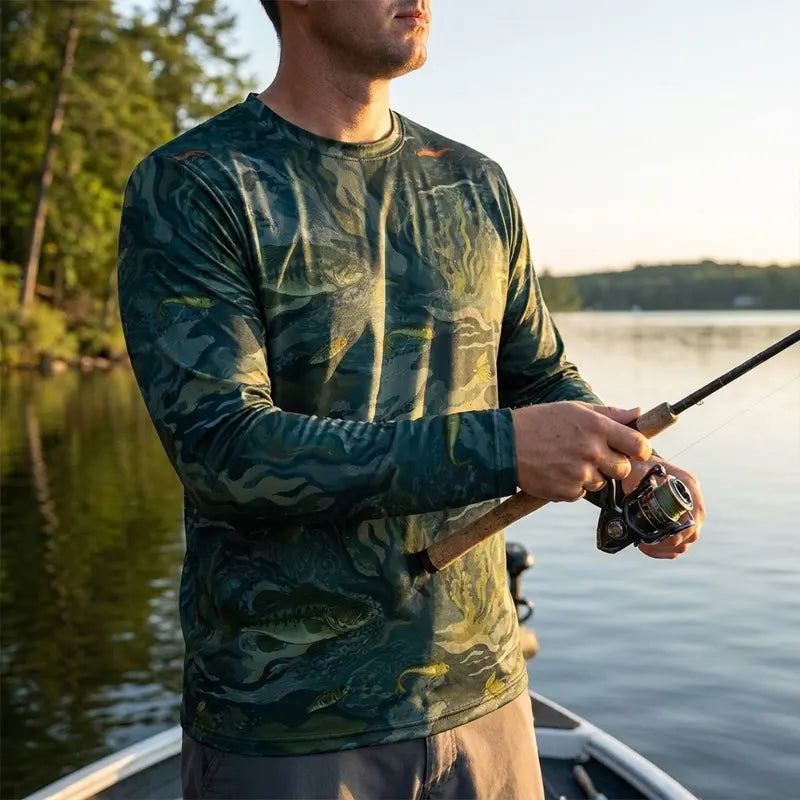
Camo Sun Shirts: Why They Beat a Plain UPF Tee on the Water
If you've spent any time on the water or in the brush, you already know that the sun doesn't care how tough you are. UV radiation bounces off water, sand, and snow - meaning anglers and outdoorspeople often get hit with double the exposure compared to someone sitting at a desk. That's where the right camo shirt comes in. It's not just about blending into the treeline anymore. Modern camouflage shirts combine serious sun protection with moisture-wicking performance, making them one of the most versatile pieces in any outdoor wardrobe.
At Fathom Thread, we've spent years designing apparel that works as hard as the people who wear it. Our camo pieces - like the Fathom Thread Camo Topographic Map Outdoor Hoodie and the Apex Angler Built To Hunt Fishing Sun Protection Shirt - were built on a simple idea: you shouldn't have to choose between looking sharp on the water and protecting your skin from harmful UV rays. In this guide, we'll break down everything you need to know about camo shirts for sun and water protection - from UPF ratings and fabric technology to pattern selection and real-world use cases.
Understanding UPF Ratings: What the Numbers Actually Mean
UPF stands for Ultraviolet Protection Factor, and it's the standard measure of how well fabric blocks UV radiation. Here's the breakdown:
- UPF 15–24: Good protection - blocks about 93.3–95.8% of UV rays
- UPF 25–39: Very good protection - blocks about 96–97.4% of UV rays
- UPF 40–50+: Excellent protection - blocks 97.5–98%+ of UV rays
The Skin Cancer Foundation reports that most visible skin aging and damage is linked to cumulative sun exposure over time. For anglers who spend 6–10 hours on open water with reflected UV bouncing off the surface, a UPF 50+ shirt isn't a luxury - it's practical gear. Unlike sunscreen, which needs reapplication every two hours and washes off with sweat, UPF fabric provides consistent protection all day long without upkeep.

Camo Patterns Compared: Which Works Best for Sun and Water
Not all camo is created equal. The pattern you choose affects more than just how well you blend into your environment - it impacts heat retention, visibility to fish, and even how the fabric performs in water. Let's break down the most popular camo styles for outdoor use.
Traditional Woodland Camo: The All-Round Choice
Classic hardwood-and-leaf camo patterns have been the go-to for North American outdoorspeople for decades. The intricate blend of textures works across a wide range of environments - for anglers, earthy greens and browns help you stay low-profile when sight-fishing from a boat or walking river banks. Because these patterns typically mix light and dark tones, they tend to absorb less heat than solid dark colors, which matters during a long summer day on the water.
Dark, Dense Camo: Built for the Brush (and the Bank)
Darker, denser camo patterns were designed for hunters who needed to disappear into hardwood forests and river bottoms - but they've crossed over into fishing for a reason: when you're wading a creek or fishing from a wooded shoreline, a dappled bark-and-leaf design keeps you hidden from both wildlife and skittish fish. Because darker tones absorb slightly more heat, pairing this style with moisture-wicking, breathable fabric matters even more.
Topographic Camo: Fathom Thread's Signature Approach
This is where things get interesting. Our topographic camo hoodie pairs camouflage shoulder panels with a large USA contour-map graphic across the back - a pattern that looks sharp and breaks up your outline in ways traditional camo can't. Topographic-style camo performs especially well in open-water and transitional environments where traditional woodland patterns stick out. Think lake shorelines, tidal flats, and marshy areas.

Fabric Technology: What Makes a Great Camo Sun Shirt
The pattern is only half the story. The fabric underneath determines how your shirt actually performs in the field. Here are the key technologies to look for:
Moisture-Wicking and Quick-Dry Performance
When you're on the water, you're dealing with a constant cycle of sun, sweat, and splashes. A good camo sun shirt pulls moisture away from your skin to the fabric's outer surface, where it evaporates quickly. Polyester and polyester-blend fabrics are the workhorses here - they're hydrophobic by nature, meaning they don't absorb water the way cotton does. That's critical: a soaked cotton shirt stays wet, chills you in the wind, and loses its UPF effectiveness.
The Fathom Thread sun protection shirt collection is built around lightweight, breathable performance fabric designed to dry fast and wick sweat throughout the day.
Breathability and Ventilation
UPF protection means nothing if the shirt is so hot you refuse to wear it. Breathable fabrics allow air to circulate through the weave, carrying heat away from your body. Key features that boost breathability include:
- Mesh-lined vents under the arms or across the upper back
- Open-weave panels in high-heat zones
- Lighter fabric weights - aim for 120–160 GSM for warm-weather use
- Looser, athletic-fit cuts that allow airflow without being baggy
Ventilation matters even in cooler weather - because when you're active, your body generates heat regardless of the ambient temperature. A well-ventilated camo shirt is a year-round piece of gear.
Durability and Colorfastness
Outdoor shirts take a beating: snagging on branches, repeated washing, UV degradation, salt water exposure. Look for solution-dyed yarns, where the color is baked into the fiber before weaving - this means the pattern won't fade after a few washes.
Camo Shirts vs. Regular Sun Shirts: Is There a Real Difference?
This is the question we hear most often: "Can't I just buy a plain white sun shirt for the same protection?" Technically, yes - a plain UPF shirt will block UV rays just as well as a camo one. But here's why camo earns its place in your gear rotation:
- Heat management: Camo patterns with mixed light and dark tones often run cooler than solid dark shirts because the lighter areas reflect more sunlight.
- Versatility: A camo shirt works on the water, on the trail, and in the blind. A bright solid-color sun shirt doesn't stand out in quite the same way. One camo shirt can cover more contexts than a specialized single-purpose shirt.
- Stain and wear camouflage: Let's be honest - outdoor shirts get dirty. Camo patterns hide fish slime, mud, sunscreen stains, and general trail grime far better than solid colors. Your shirt looks fresh longer between washes.
- Wildlife considerations: If you're fishing in areas where you might encounter wildlife - or combining a fishing trip with early-season scouting - camo keeps a lower profile than bright colors.
For pure beach days or resort vacations, a plain sun shirt is perfectly fine. But if your outdoor life involves real environments - rivers, forests, lakeshores, coastlines - a camo sun shirt is the smarter, more functional choice.
Best Use Cases: Where Camo Sun Shirts Shine
Fishing: Freshwater and Saltwater
Whether you're fly-fishing a mountain stream or casting off a flats boat, camo sun shirts are purpose-built for angling. The UPF protection keeps your shoulders, arms, and back safe during those long midday sessions when the fish are most active. Quick-dry fabric handles the inevitable splashes, and the camouflage pattern keeps you stealthy when approaching spook-prone species. Browse the full fishing collection for more UPF-friendly designs.
Hunting: Early Season and All-Day Sit
Early-season hunting often means warm weather - sometimes 80°F+ with high humidity. That's when a camo sun shirt becomes your base layer. It keeps you cool, blocks UV, and provides the concealment you need for sit-and-wait hunting over food plots or along game trails. Check out the hunting collection for patterns designed with warm-weather sits in mind.
Hiking and Trail Exploration
Camo isn't just for hunting and fishing. A lightweight camo sun shirt makes an excellent hiking top - especially on exposed ridgelines, desert trails, or any hike where sun exposure is a concern. The breathable fabric and UPF protection work just as well on a long backpacking trip as they do on a river. Explore the hiking collection for more options.
Expert Tips: Getting the Most from Your Camo Sun Shirt
- Size up for layering. A slightly looser fit improves airflow and gives you room for a base layer when the weather turns.
- Wash in cold water, hang to dry. Hot water and high-heat drying degrade UPF treatments over time. Cold wash + line dry = longer-lasting protection. This is especially important for preserving the vibrancy of camo patterns.
- Replace when fabric thins. UPF protection degrades as fabric wears. If your shirt has become translucent or the weave has stretched out, it's time for a replacement - even if the pattern still looks good.
- Don't forget the neck and hands. A camo sun shirt covers your torso and arms, but your neck, ears, and the backs of your hands still need attention. Pair your shirt with a neck gaiter for more complete coverage.
- Match your pattern to your environment. Woodland patterns for hardwoods and mixed terrain. Darker, denser camo for river corridors and dark timber. Topographic-style camo for open water and transitional zones. The right pattern makes a real difference in both function and style.
What Sets a Good Camo Sun Shirt Apart
We started Fathom Thread because we were tired of choosing between outdoor gear that performed well and outdoor gear that looked good. When you're shopping for a camo sun shirt, look for these features:
- UPF-rated fabric - verified, not just claimed
- Quick-dry, moisture-wicking performance
- Original camo patterns that stand out from mass-market prints
- Reinforced stitching at stress points for durability that lasts seasons, not months
- Flat-lock seams that don't chafe during long days of casting or hiking
- Tagless comfort - because nobody wants an itchy label at mile eight
The Fathom Thread Camo Topographic Map Outdoor Hoodie pairs camouflage shoulder panels with a large topographic USA map graphic on the back - functional camouflage with a design that tells a story, not just mass-market print.
Frequently Asked Questions
Do camo shirts really provide better sun protection than regular shirts?
The protection comes from the fabric's UPF rating, not the pattern itself. However, camo shirts marketed for outdoor use are more likely to feature UPF-rated, quick-dry fabrics than casual cotton tees. A plain white cotton t-shirt offers only about UPF 5–7 - barely any protection at all. A dedicated UPF 50+ camo sun shirt blocks around 98% of UV radiation.
Can I wear camo shirts in the water?
Absolutely. Performance camo shirts made from polyester or polyester blends are designed to get wet and dry quickly. They won't absorb water like cotton, and the quick-dry properties mean you'll be comfortable again within minutes of getting back in the sun.
How often should I replace my UPF camo shirt?
With proper care (cold wash, line dry), a quality UPF camo shirt should maintain its protection for many washes. If the fabric becomes thin, stretched, or faded, it's time for a replacement. Most active outdoorspeople find they need a new shirt every 1–2 seasons of heavy use.
What's the difference between camo for fishing and camo for hunting?
The main difference is pattern selection. Fishing-friendly camo tends to favor lighter, water-adjacent tones that blend with shorelines and open environments. Hunting camo often uses darker, denser patterns for forest concealment. Topographic-style designs tend to work well for both.
Final Thoughts: Invest in Your Skin (and Your Style)
The best outdoor gear is the gear you actually want to wear. A camo sun shirt with UPF 50+ protection, quick-dry performance, and a pattern you're proud to show off isn't just practical - it's the kind of piece that earns a permanent spot in your rotation. Whether you're chasing fish on a tidal flat, sitting in a blind at dawn, or hiking a ridgeline at noon, the right camo shirt keeps you protected, comfortable, and ready for whatever the day throws at you.
Ready to upgrade your outdoor wardrobe? Check out the Apex Angler Built To Hunt Fishing Sun Protection Shirt and the Camo Topographic Map Outdoor Hoodie, or explore the broader apparel collection for matching hats, pants, and accessories designed for life on the water and in the wild.
Have questions about which camo pattern is right for your environment? Check out our latest articles for more gear guides, fishing tips, and outdoor inspiration.