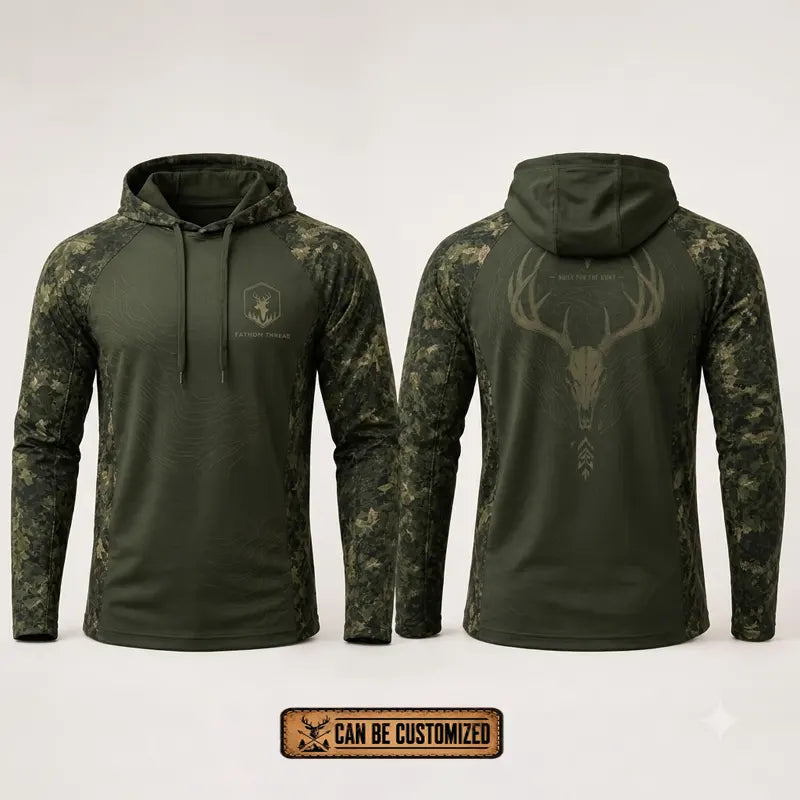
Camouflage Hunting Outfit: The Right Pattern for Every Terrain
Your camouflage hunting outfit is only as effective as the environment it's designed for. Put the wrong camo pattern in the wrong terrain and you become the most visible person in the woods - no matter how still you sit. Deer, turkey, and hogs don't see color the same way humans do, but they detect contrast, silhouette, and movement better than most hunters realize. Building a proper camouflage hunting outfit means matching pattern density, color palette, and layer strategy to the specific ground you're hunting.
This guide focuses specifically on matching camo to terrain. If you're still building out your base wardrobe - base layers, mid-layers, sizing - start with our hunting apparel buying guide first, then come back here to dial in the pattern for where you actually hunt.
Here's how to build a terrain-specific camo outfit that actually works.

Hardwood Forest Camouflage Outfit
Eastern whitetail country - dense timber, fallen leaves, mixed shade. Your camouflage hunting outfit here needs to mimic tree bark, leaf litter, and dappled light patterns.
Pattern type: Realistic leaf-and-bark patterns with vertical elements. Look for patterns that blend greens, browns, and grays in irregular shapes - large blocks for distant concealment, fine detail for close-range work.
Full outfit formula:
- Top: Camo long-sleeve shirt in a woodland pattern as your outer layer
- Mid: Solid brown or olive hoodie underneath for warmth
- Base: Moisture-wicking tee in earth tone
- Bottom: Matching camo pants or solid cargo pants in a complementary shade
- Head: Camo bucket hat that matches your pattern family
- Neck: Camo neck gaiter for face and neck concealment
The key in hardwood: your camo should look like the forest floor and tree trunks behind you, not a pattern sitting in front of them.

👉 Shop the Built For The Hunt Deer Skull Camo Hoodie
Open Terrain and Grassland Camouflage Outfit
Western pronghorn country, Texas hog hunting, Midwestern fields - wide-open spaces where you can be seen from hundreds of yards away. Dense leafy camo looks completely out of place here and can actually make you more visible.
Pattern type: Sparse, open patterns with lots of tan, light brown, and gray. The pattern should mimic the color and texture of dried grass, dirt, and scattered brush - not a forest canopy.
Full outfit formula:
- Top: Lighter-weight camo shirt or polo in desert/prairie tones
- Mid: Tan or khaki long sleeve as needed
- Bottom: Solid tan or camo pants in matching color range
- Head: Wide-brim camo hat or baseball-style camo cap for sun protection
- Footwear: Lighter boots that blend with the terrain - dusty tan or brown, not dark forest colors
In open terrain, your outline is your biggest enemy. A good camouflage hunting outfit here breaks up the human silhouette against the sky and horizon line.

Mountain and Mixed Terrain Camouflage Outfit
Mountain hunting means everything changes with elevation and aspect. You might start in dense pine forest at dawn, move through rocky ridgelines by midday, and descend into meadow grass by evening. Your camouflage outfit needs to work across all of it.
Pattern type: Transitional patterns with a mix of green, gray, brown, and tan. Think "macro camouflage" - patterns that work at multiple distances and don't look obviously wrong in any single environment.
Full outfit formula:
- Top: Layerable camo system - base tee, camo long sleeve, camo outer shell
- Mid: Fleece or hoodie in neutral gray or brown that peeks through naturally
- Bottom: Versatile camo pants that work in both timber and rock
- Head: Bucket hat in a neutral camo for versatility
- Pack: Camo sling bag for gear that matches your outfit

👉 Shop the Deer Skull Camo Polo Shirt
Snow and Late-Season Camouflage Outfit
When the ground turns white, every non-white element in your outfit becomes a beacon. Late-season deer hunters in the North, ice anglers crossing over, predator hunters in snow country - you need real snow camo, not just a light jacket over brown pants.
Pattern type: Predominantly white with gray and brown speckle. The white should cover at least 60-70% of the pattern. Anything less and you'll still stand out.
Full outfit formula:
- Top: Snow camo jacket or white outer shell
- Mid: Gray or white hoodie - no dark colors showing through
- Bottom: Snow camo pants or white overpants
- Head: White or light gray beanie and face mask
- Hands: White or gray shooting gloves
The rule in snow: if any piece of your outfit is dark, you've compromised the whole thing. Every visible surface needs to be light.

Marsh and Wetland Camouflage Outfit
Waterfowl hunting, marsh hog hunts, early-season bow hunting near wetlands - these environments have unique visual characteristics: vertical cattails, open water reflections, and dark-light contrast that doesn't exist in upland terrain.
Pattern type: Tall, vertical patterns with dark browns, greens, and open spaces that mimic water. Waterfowl camo tends to have more contrast than woodland patterns because the marsh environment itself is full of contrast.
Full outfit formula:
- Top: Camo wader-style jacket or waterproof camo shell
- Mid: Insulating layer in olive or dark brown
- Bottom: Waders or waterproof camo pants
- Head: Camo face mask and hat with vertical pattern elements
- Hands: Waterproof camo gloves
Camo by Season: How Colors Shift Through the Year
Terrain isn't the only variable - the same patch of woods looks completely different in September than it does in December. A pattern that disappears into early-season foliage can stick out badly once the leaves drop.
- Early season (late summer/early fall): Foliage is still green and dense. Lean toward patterns with more green tones and leafy detail, especially for turkey and early bow season.
- Mid-season (fall): Leaves turn brown, tan, and gold, and vegetation starts to thin. Standard woodland or brush patterns in browns and muted greens do the heavy lifting here - this is where most all-purpose camo performs best.
- Late season (winter): Bare branches, dead grass, and potential snow cover. Darker patterns become too heavy and obvious; shift toward grayer, sparser patterns or true snow camo depending on ground cover.
If you only own one camo pattern, mid-season woodland or brush patterns tend to be the safest all-around choice - they're rarely perfect, but they're never badly wrong either.
The Camouflage Hunting Outfit Checklist
Before heading out, run through this quick check:
- Does your camo pattern match the dominant colors of your hunting area?
- Is your outfit layered so you can adjust as temperatures change?
- Are there any shiny surfaces (watch faces, buckles, zippers) that need covering?
- Does your camo work at both close range (under 30 yards) and distance?
- Are all exposed skin areas (face, neck, hands) accounted for?
FAQ: Camouflage Hunting Outfits
Does camo pattern matter more than staying still?
No. Camouflage reduces contrast and helps break up your outline, but it doesn't make you invisible. Most game animals key in on movement first, scent second, and pattern a distant third. A great camo outfit with poor stand discipline will still get you busted.
Can one camo pattern work for every terrain?
Reasonably well, but not perfectly. A mid-toned woodland or brush pattern is the closest thing to an all-purpose option and will get you through most eastern hunting situations. Snow and true desert terrain are the two exceptions where a dedicated pattern makes a real difference.
Do my top and bottom need to match exactly?
Not exactly, but they should be in the same color family and density. Mismatched patterns - a dark woodland top over light tan pants, for example - create a visible break in your outline that can be more noticeable than either pattern alone.
How much of my camouflage hunting outfit should be dedicated to concealment vs. warmth?
Concealment comes from the outer, visible layers - pattern and color matter most there. Warmth is handled by base and mid-layers, which can be solid, neutral colors since they're rarely seen. Don't overspend on camo mid-layers that never show.
A well-built camouflage hunting outfit isn't about buying the most expensive gear. It's about understanding your environment, choosing patterns that work with it, and layering them into a system that keeps you hidden, comfortable, and ready for whatever the day brings.
Browse the full hunting apparel collection and camo shirts at Fathom Thread for pattern-matched pieces designed for real hunting conditions - or start from the basics in our hunting apparel buying guide.