Beginner Duck Hunting Gear: What to Wear When Duck Hunting (Complete Guide)
So you're thinking about getting into duck hunting? Smart move. It's one of the most thrilling outdoor experiences you can have, but it's also one of the most unforgiving when you're unprepared. Sitting in a freezing marsh at 5 AM with wet feet and a shivering body isn't just miserable - it can be dangerous.
That's exactly why we put together this complete guide on beginner duck hunting gear and what to wear when duck hunting. Whether you're a total newbie or you've been tagging along with experienced hunters and want to finally get your own kit sorted, this article covers everything you need to know.

Why What You Wear Matters More Than You Think
Unlike other types of hunting, duck hunting means sitting or standing in cold, wet conditions for hours - often before sunrise. The waterfowl hunting environment combines the worst of everything: freezing temperatures, rain, wind, and standing water. If your clothing isn't dialed in, your hunt is going to be cut short.
Ducks also have sharp eyesight and can spot unnatural colors and movement from a distance. That's why thinking about camouflage - even if it's more about the hunting-culture look than a technical concealment system - is part of getting dressed right for the day.
The Layering System: Your Foundation for Duck Hunting
The single most important concept for what to wear when duck hunting is the layering system. You need three layers that work together:
Base Layer: Moisture Management
Your base layer sits directly against your skin. Its job is to wick sweat and moisture away from your body. Cotton is your worst enemy here - it holds moisture and will make you colder than if you wore nothing at all.
Look for:
- Merino wool or synthetic fabrics - both wick moisture effectively
- Full-length tops and bottoms - don't short-change yourself with short base layers
- Reinforced seams in high-wear areas for durability inside waders
Mid Layer: Insulation and Camp Style
This is your warmth layer. It traps body heat while still allowing moisture to pass through to the outer layer.
- Fleece jackets or pullovers - lightweight and warm
- Down or synthetic insulated vests - core warmth without restricting arm movement for shooting
- A camo-print hoodie or sweater - good for early-season hunts and for wearing back at camp once you're out of the blind
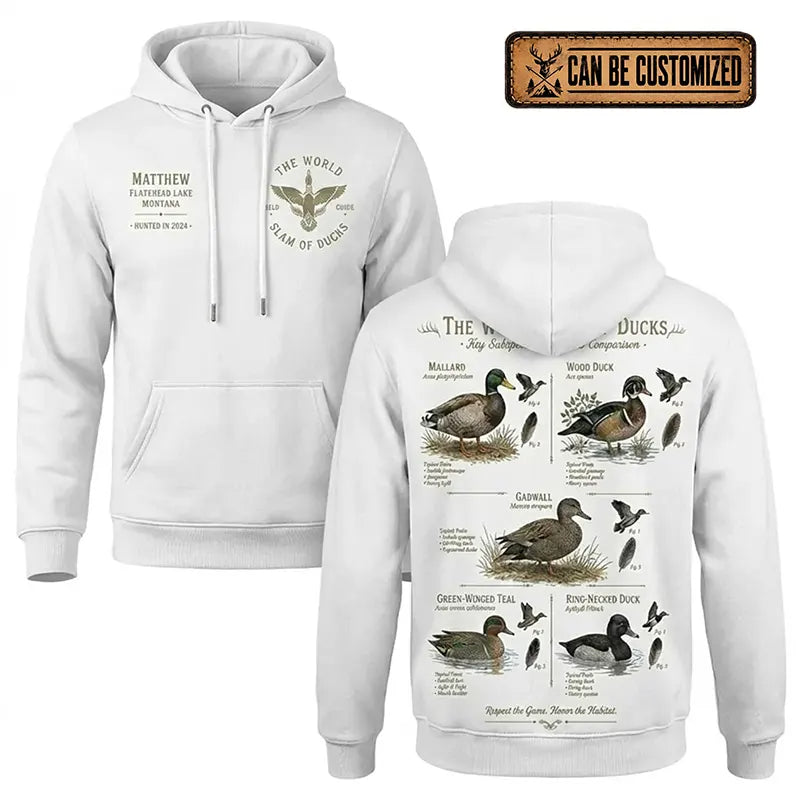
The World Slam of Ducks Waterfowl Hunting Sweater is a good option for this layer - it's not a technical concealment garment, but a warm, comfortable piece with waterfowl artwork that you can personalize with your name and hunting spot, and it looks just as good at camp as it does under a shell.

👉 Shop the World Slam of Ducks Waterfowl Hunting Sweater
Outer Layer: Wind and Waterproof Protection
This is your shield against the elements. Duck hunting means rain, sleet, snow, and wind - your outer layer needs to block all of it.
- Waterproof, breathable shell jacket and pants - this is worth buying as a dedicated technical purchase from an outdoor brand that specializes in it
- Camouflage patterns that match your hunting environment - reeds for marshes, hardwood timber for flooded timber hunts
- Quiet fabric - avoid noisy, crinkly materials that spook birds
For early-season or milder days when a full shell is overkill, a graphic camo tee like the Hunt Wild Hex Camo USA T-Shirt works as a standalone layer that fits the hunting-camp look - it's an affordable piece for beginners building out their beginner duck hunting gear collection, not a substitute for technical concealment if you need it.

👉 Shop the Hunt Wild Hex Camo USA T-Shirt
Waders: The Most Important Piece of Gear
If you buy only one thing from this list, make it a good pair of waders. Here's why:
Duck hunting means entering water - marshes, flooded timber, muddy creek bottoms, and icy ponds. Without waders, you're going to get wet, cold, and probably leave the marsh within an hour.
Types of Waders for Beginners
- Neoprene Waders (5mm-7mm) - best for cold weather and late-season hunts. Insulated, durable, and warm. These are the most popular choice for duck hunters.
- Breathable Waders - lighter weight, great for early-season hunts and warmer conditions. You'll need to add insulation layers underneath.
- Chest Waders vs. Hip Waders chest waders are the standard for duck hunting. Hip waders are insufficient for most waterfowl situations.
Pro tip for beginners: Don't cheap out on waders. A $50 pair will leak at the worst possible moment. Invest in a quality pair in the $150-$300 range - they'll last for seasons.
What to Wear Under Your Waders
This is a question every new hunter asks. The answer depends on temperature:
- Above 40°F (4°C): Light base layer + thin fleece
- 20-40°F (-6 to 4°C): Merino base layer + mid-weight fleece or insulated pants
- Below 20°F (-6°C): Heavyweight base layer + thick fleece or down layer + insulated waders
Always wear wool or synthetic socks inside your waders. Never cotton.

Camouflage: Blending Into the Environment
Ducks have excellent color vision and can detect movement at remarkable distances. If you're using a technical concealment pattern, match it to your hunting environment:
- Marsh and reed environments: camo patterns with tall grass, cattail, and brown/green tones
- Flooded timber: hardwood patterns with bark and leaf textures work best
- Open water and field hunts: more open, lighter patterns that blend with sky and crop fields
Remember - technical concealment isn't just about your shirt and pants. You need to think about your face, hands, and head too.

Headwear and Face Protection
Don't overlook your head and face. A significant amount of body heat escapes through your head, and your face is one of the most visible parts of your body to incoming birds.
Essential Headwear
- Camouflage beanie or skull cap - warmth, and it breaks up the shape of your head
- Bucket hat or ball cap - breaks up the round shape of your head and adds shade while you wait in the blind
- Neck gaiter or balaclava - protects your face and neck from wind and cold, and helps break up the light color of your skin
Face and Hand Camo
- Face paint or camo stick - breaks up natural skin tones on your face, especially around the eyes and cheekbones, if you're hunting a technical concealment setup
- Gloves - choose gloves that still let you operate your shotgun safely. Some hunters prefer fingerless gloves for trigger control

Essential Duck Hunting Gear Beyond Clothing
Now that we've covered what to wear when duck hunting, let's talk about the rest of your beginner duck hunting gear checklist:
Shotgun and Ammunition
- 12-gauge or 20-gauge shotgun - 12-gauge is the standard for waterfowl. A reliable pump-action is a great starter gun
- Non-toxic shot shells - steel, bismuth, or tungsten. Lead shot is illegal for waterfowl hunting
- Shot size 2, 3, or 4 - versatile for most duck species
- Bring at least 50 shells per day - two boxes of 25
Duck Calls
- Single-reed call - versatile, produces a range of sounds. Slightly harder to master but more realistic
- Double-reed call - easier for beginners, more forgiving, but less range of sounds
- Practice before the season starts - nothing scares ducks faster than bad calling
Decoys
- Start with 6-12 decoys - a dozen is a solid beginner setup
- Match the species you'll be hunting - mallards for most areas, pintails, teal, etc.
- Mix of floaters and sleepers - creates a more natural spread on the water
Blind or Layout Boat
- Layout blind - portable, affordable, great for field hunting
- Reed blind or natural cover - use the environment to your advantage
- DIY blind materials - camo netting, burlap, and natural vegetation
Blind Bag and Accessories
Every duck hunter needs a reliable bag to carry their calls, shells, gloves, and other essentials. Look for a waterproof or water-resistant bag with multiple compartments.

Budget-Friendly Beginner Duck Hunting Gear Setup
You don't need to spend a fortune to get started. Here's a realistic budget breakdown for a beginner duck hunting gear setup:
| Item | Budget Range |
|---|---|
| Waders (neoprene) | $100-$250 |
| Base layers | $30-$80 |
| Camo hoodie or sweater / mid-layer | $30-$60 |
| Waterproof outer shell | $50-$150 |
| Camo hat + neck gaiter | $20-$50 |
| Duck call | $15-$40 |
| Decoys (half dozen) | $30-$80 |
| Total Estimated Cost | $275-$710 |
Compare that to buying a single pre-packaged "beginner duck hunting kit" from a big-box store for $500+ that includes low-quality gear that won't last. Building your kit piece by piece gives you better gear for less money.
Common Beginner Mistakes to Avoid
1. Wearing Cotton Anything
Cotton kills. It absorbs moisture, holds it against your skin, and makes you colder. Every layer should be synthetic or wool.
2. Over-Camouflaging in the Wrong Pattern
Wearing bright green marsh camo in a brown winter marsh is worse than wearing no camo at all. Match your pattern to your environment.
3. Forgetting Your Hands and Feet
Your hands and feet are the first body parts to get cold. Invest in quality insulated, waterproof gloves and wool socks.
4. Skipping the Face Mask
Your face is one of the most visible things to incoming ducks. Even a simple neck gaiter pulled up over your nose makes a difference.
5. Not Checking the Weather
Duck hunting conditions can change fast. Always check the forecast and pack accordingly. It's better to have an extra layer you don't need than to freeze halfway through the hunt.
Complete Beginner Duck Hunting Gear Checklist
Clothing Layers:
- ☐ Moisture-wicking base layer (top and bottom)
- ☐ Insulating mid-layer (fleece or camo hoodie/sweater)
- ☐ Waterproof outer shell jacket and pants
- ☐ Camo hat or beanie
- ☐ Neck gaiter or balaclava
- ☐ Insulated, waterproof gloves
- ☐ Wool or synthetic socks (bring an extra pair)
Essential Gear:
- ☐ Neoprene or breathable chest waders
- ☐ Waterproof boots (if not using boot-foot waders)
- ☐ 12-gauge or 20-gauge shotgun
- ☐ Non-toxic shotgun shells (50+ rounds)
- ☐ Duck call(s)
- ☐ Decoys (6-12 minimum)
- ☐ Blind or natural cover materials
- ☐ Headlamp or flashlight (for pre-dawn setup)
- ☐ Hunting license and waterfowl stamp
- ☐ Blaze orange vest/hat (for travel to and from the blind)
- ☐ Hand warmers
- ☐ Thermos with hot coffee or tea
- ☐ Blind bag with extra shells, calls, and accessories
FAQ
Do I really need waders, or can I start with hip boots?
Chest waders are the standard for duck hunting. Hip waders leave you exposed the moment water gets deeper than your hip, which happens more often than beginners expect.
What's the biggest mistake first-time duck hunters make with clothing?
Wearing cotton anywhere in the layering system. Cotton holds moisture against your skin and makes you colder than wearing nothing at all once it's wet.
Do I need a technical concealment pattern, or is a graphic camo tee enough?
For most casual and camp situations, a graphic camo piece is fine. If you're hunting from a tight blind or layout boat where concealment really matters, that's worth a dedicated technical pattern matched to your terrain.
How much should I budget for a full beginner setup?
Realistically $275–$710 covering waders, layers, an outer shell, headwear, a call, and a half-dozen decoys - well under the cost of a low-quality pre-packaged kit.
Can I personalize pieces like the World Slam of Ducks Sweater?
Yes. It takes a name, hunting location, and year, with a live preview that updates as you type before it's printed.
Final Thoughts
Getting started with duck hunting doesn't require a massive investment, but it does require smart choices about your beginner duck hunting gear. The most important rule to remember when figuring out what to wear when duck hunting is this: stay warm, stay dry, and stay hidden. Everything else is secondary.
Start with quality waders, a solid layering system, and reliable outer protection. Add calls and decoys as your budget allows. And most importantly - get out there, learn from every hunt, and enjoy the experience. There's nothing quite like watching a flock of mallards drop into your decoy spread on a crisp autumn morning.
Ready to build out the camp-wear side of your kit? Check out the full hunting collection at Fathom Thread - personalized tees, sweaters, hoodies, and headwear built for the drive out, the blind between flights, and camp afterward.