What to Wear Duck Hunting: The Complete Guide to Duck Hunting Clothes
Standing in a flooded timber blind at 5 AM with 20-degree windchill - your duck hunting clothes aren't just an accessory. They're the difference between a miserable morning and the hunt of a lifetime. Duck hunting demands gear that handles water, cold, wind, and hours of sitting still, all while keeping you concealed from some of the sharpest eyes in the bird world. Whether you're a first-time waterfowler or a seasoned veteran upgrading your kit, this guide breaks down exactly what to wear duck hunting so you stay warm, dry, and hidden from flight to retrieve. If you're just getting started, our beginner duck hunting gear guide covers the basics before you buy anything.

Essential Duck Hunting Clothes: The Layering System That Works
Every successful duck hunting outfit is built on the same principle: layering. Unlike deer hunting where you move through woods, duck hunting means sitting still for hours in wet, cold conditions. Your layering system needs to trap heat, shed moisture, and block wind and rain - without restricting your swing when birds finally show up overhead.
Base Layer: The Foundation of Your Duck Hunting Outfit
Your base layer sits directly against your skin and does one job: keep you dry. Sweat is your enemy on a duck hunt. Once moisture builds up, it cools you down fast - and hypothermia doesn't care how tough you are.
- Material: Merino wool or synthetic moisture-wicking fabric. Avoid cotton at all costs - it traps moisture and loses all insulating power when wet.
- Fit: Snug but not tight. Your base layer should wick sweat away without restricting circulation.
- Weight: Lightweight for early season (September teal hunts). Midweight to heavyweight for peak and late season when temperatures plummet.
A quality thermal base layer set is the most important piece of duck hunting apparel you'll own. Look for merino blends in the $50–$80 range for solid performance. For the graphic tee you'll actually wear at camp under that base layer, see our duck hunting t shirts guide.

Mid Layer: Insulation That Keeps You Warm in the Blind
Once your base layer handles moisture, your mid layer provides warmth. This is where your duck hunting outfit starts taking shape:
- Fleece jackets or hoodies: Lightweight, packable, and great for moderate temperatures. Fleece breathes well and dries fast.
- Insulated vests: Keep your core warm while leaving your arms free for loading and swinging your shotgun.
- Heavyweight parkas: For brutal cold, a thick insulated mid layer under your outer shell can be the only thing keeping you sane on a January hunt in the Dakotas.
Pro tip: Bring multiple mid layers you can add or remove as temperatures shift. Dawn might be 15°F, but by 10 AM the sun can make you wish you'd packed lighter. The best waterfowl hunting gear is adaptable.
For a personalized mid layer built specifically around waterfowl rather than generic camo, the World Slam of Ducks Waterfowl Hunting Sweater is a crew-neck built for camp and the walk in, not the blind itself - vintage field-guide-style artwork of five duck species on the back, with your name, hunting ground, and year on the front. See our full duck hunting sweater guide or duck hunting hoodie guide for more mid-layer options.

Outer Layer: Waterproof Shell and Camouflage
This is your first line of defense against the elements - and the most visible piece of your duck hunting clothes setup. Your outer shell needs three things:
- Waterproofing: You'll be in or near water. Rain, sleet, marsh mud, and spray from retrieve dogs all demand a shell that keeps moisture out. Look for sealed seams and at least 5,000mm waterproof rating.
- Wind resistance: Open water and field hunts mean zero windbreak. A shell that blocks wind makes a 25-degree morning feel like 40.
- Camouflage pattern: Match your environment. Bottomland patterns for timber and cypress swamps. Grass-blade patterns for field and marsh hunts. Solid olive drab or khaki works surprisingly well in many situations.
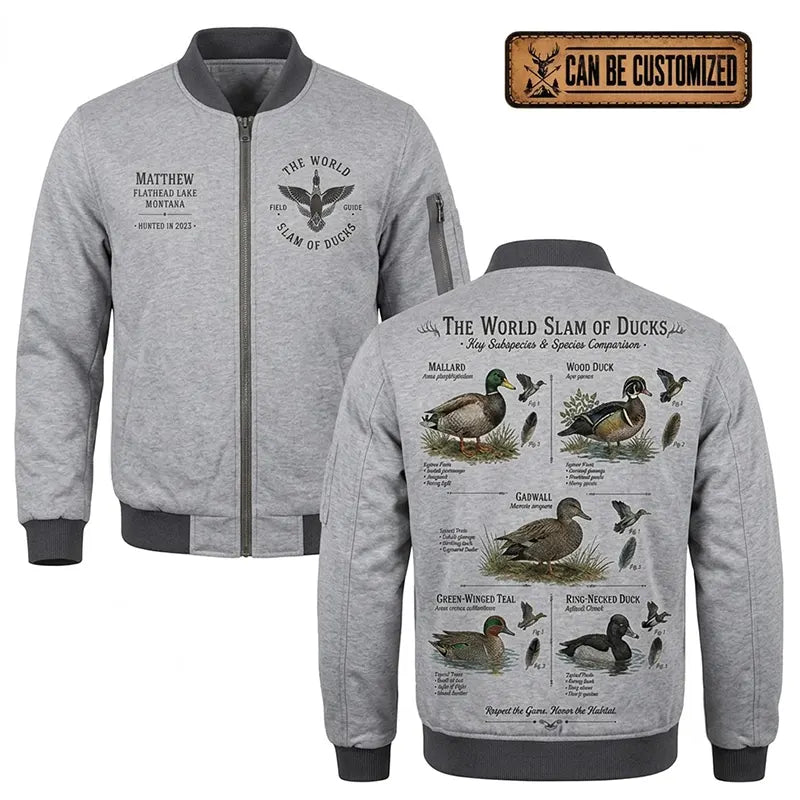
Popular camo patterns for waterfowl include Mossy Oak Bottomland, Realtree MAX-7, and Sitka's Waterfowl Optifade. The pattern you choose should match the vegetation and terrain where you'll actually be hunting - a technical waterproof shell from a dedicated outdoor brand is worth the investment here. For the layer you'll wear once you're back at camp, the World Slam of Ducks Waterfowl Hunting Bomber Jacket adds a warm outer layer with the same personalized artwork - built for warmth around the fire, not as a waterproof shell for the blind. See our full duck hunting jackets guide for the rest of the lineup.

Duck Hunting Gear Essentials Beyond Clothes
Your duck hunting outfit isn't complete without the gear that keeps you functional in the field. Here's what separates adequate from excellent:
Waders: The Most Important Piece of Waterfowl Hunting Gear
If you hunt marshes, rivers, or any spot where you're standing in water, waders aren't optional - they're essential. The right pair of waders can transform a miserable, wet hunt into a productive morning.
- Boot-foot vs. stocking-foot: Boot-foot waders (neoprene boots attached) are convenient and warm. Stocking-foot waders (require separate boots) offer better fit and ankle support but cost more overall.
- Insulation: Uninsulated for early season and southern hunts. 600g–1600g Thinsulate for cold northern water. More insulation = more warmth but also more bulk and heat if the sun comes out.
- Breathable vs. neoprene: Breathable waders are lighter and more comfortable for active hunts. Neoprene is warmer and more durable but heavier and hotter.
Top brands for duck hunting waders include Drake Waterfowl (Guardian Elite line), LaCrosse (Wetlands II), Sitka (Delta Waders), and Avery GHG. You can find quality options from $150 (budget-friendly) to $600+ (premium breathable systems).
Duck Hunting Accessories You'll Actually Use
Beyond the core duck hunting apparel layers and waders, these accessories make your setup complete:
- Waterproof gloves: Neoprene gloves (2mm–5mm) let you handle decoys and calls while keeping fingers functional.
- Beanie or camo cap: A warm beanie under a cap doubles your insulation. Your head loses a lot of heat.
- Neck gaiter or balaclava: Protects your face and neck from wind. Crucial when you're sitting still for hours.
- Hand warmers: Disposable chemical warmers in your gloves and pockets are cheap insurance against cold fingers.
- Blind bag: A waterproof bag to carry calls, shells, coffee, extra gloves, and your hunting license while you wade in.
- Quality boots: If you're not in waders, insulated waterproof boots (800g–1200g Thinsulate) are your go-to.
Duck Hunting Clothes by Season: What to Wear When
Not every duck hunt is the same. Your duck hunting gear should shift with the season and conditions.
Early Season (September–October)
Early teal and September duck hunts are often warm - sometimes 80°F+. Your clothing needs are minimal:
- Lightweight camo shirt or tee
- Light pants or shorts with wading capability
- Sun protection (hat, sunscreen, neck gaiter)
- Light chest waders or hip boots (depending on water depth)
- Insect repellent clothing or treated layers
Don't over-layer. Early season is about staying cool and dry, not fighting cold. The World Slam of Ducks Waterfowl Hunting Tank Top carries the same design in a breathable, sleeveless cut - good for early-season mornings that warm up fast, or for camp wear once the sun's out.

Peak Season (November–December)
This is prime duck hunting time in most regions - and temperatures can swing wildly. Your layering system matters most here:
- Merino base layer (midweight)
- Fleece or insulated mid layer
- Waterproof camo shell jacket and bibs
- Insulated waders (600g–1000g)
- Warm hat, gloves, and neck protection
Pack layers you can shed. A hunt that starts at 25°F might reach 45°F by noon.
Late Season (January–February)
Late-season waterfowl hunting is the coldest, toughest hunting you'll face. Your duck hunting clothes need to handle brutal conditions:
- Heavyweight thermal base layer
- Thick insulated mid layer (down or synthetic fill)
- Heavy-duty waterproof outer shell
- High-insulation waders (1200g–1600g Thinsulate)
- Insulated waterproof boots if wading isn't required
- Full-face protection: balaclava or face mask
- Multiple pairs of gloves (plus backups)
Invest in quality here. Cheap waterfowl hunting gear will fail you when temperatures hit single digits and you're standing in icy water for four hours.
Budget vs. Premium Duck Hunting Gear: Where to Spend and Where to Save
You don't need $2,000 worth of duck hunting apparel to have a successful hunt. Here's where your money matters most:
Spend More On
- Waders: If you're standing in cold water, cheap waders will leak - and there's no recovering from that. Budget at least $150–$250 for reliable waders.
- Outer shell: Your waterproof camo jacket and bibs are your primary defense. Look for sealed seams, quality zippers, and durable fabric.
- Boots: If you hunt without waders, invest in quality insulated waterproof boots. Cold feet will end your hunt faster than anything.
Save Money On
- Base layers: You can find excellent merino or synthetic base layers at outdoor retailers for $30–$50 per piece.
- Mid layers: A fleece jacket from a general outdoor brand works just as well as one marketed specifically for waterfowl.
- Accessories: Hand warmers, neck gaiters, and basic camo beanies are cheap and effective regardless of brand.
A solid duck hunting outfit can be assembled for $300–$500 if you shop smart. Premium setups with Sitka, Drake, or Avery run $800–$1,500+. Both work - it's about matching your investment to how often you hunt and how extreme your conditions get.
Women's Duck Hunting Clothes: Options That Actually Fit
Women's duck hunting apparel has improved dramatically. Brands like Drake Waterfowl, Sitka, and Natural Gear now offer women-specific cuts in camo jackets, bibs, and waders. Key differences from men's gear:
- Fit: Women's cuts accommodate different body shapes - narrower shoulders, tapered waist, room in hips. This matters for mobility and layering.
- Sizing: Waders and boots in women's sizes mean better fit and fewer blisters.
- Style options: More color and pattern choices beyond traditional camo.
If you're putting together a duck hunting outfit for women, the layering principles are identical - just make sure the fit is right. Ill-fitting gear restricts movement and makes layering uncomfortable. See our dedicated women's duck hunting apparel guide for fit, layering, and gift-worthy personalized pieces built around this exact issue.

Common Mistakes With Duck Hunting Clothes
Even experienced hunters mess up their waterfowl hunting gear setup. Here's what to avoid:
- Wearing cotton: Cotton kills in cold, wet environments. Period. Replace every cotton piece in your hunting wardrobe.
- Over-layering: Too many layers restrict movement and make you sweat. Sweat makes you cold. Find the minimum layers that keep you warm.
- Wrong camo for the environment: Don't wear woodland camo in a rice field. Match your pattern to your terrain.
- Forgetting extremities: Cold hands and feet will ruin a hunt faster than a cold torso. Prioritize gloves, warm socks, and head coverage.
- Not testing gear before the hunt: Try your full duck hunting outfit at home first. Walk around, swing your arms, make sure everything fits and layers properly.
Quick-Reference Duck Hunting Gear Checklist
| Item | Early Season | Peak Season | Late Season |
|---|---|---|---|
| Merino base layer | Lightweight | Midweight | Heavyweight |
| Mid layer (fleece/insulated) | Optional | Yes | Thick insulated |
| Waterproof camo shell | Light rain jacket | Full jacket + bibs | Heavy-duty shell |
| Waders | Light chest/hip | 600g–1000g | 1200g–1600g |
| Gloves | Light shell | Neoprene 3mm | Neoprene 5mm + liner |
| Head/face protection | Hat + sunscreen | Beanie + gaiter | Balaclava + beanie |
| Boots | Water shoes/light | Insulated boot-foot | Heavy insulated |
| Hand warmers | No | Optional | Essential |
Frequently Asked Questions
What should I wear duck hunting if I'm just starting out?
Start with the basics rather than buying every piece at once: a moisture-wicking base layer (never cotton), a mid layer you can add or remove, and rented or budget waders while you figure out how often you'll actually hunt. See our beginner duck hunting gear guide for a full first-season checklist.
Why is cotton such a problem for duck hunting clothes?
Cotton absorbs and holds moisture instead of wicking it away, and once it's wet it stops insulating almost entirely. In cold marsh conditions, that combination speeds up heat loss and raises your risk of hypothermia. Merino wool and synthetic fabrics stay warm even when damp.
Do I need different clothes for early season versus late season duck hunting?
Yes. Early season (September-October) can run 80°F+, so lightweight, breathable layers and light waders are enough. Late season (January-February) demands heavyweight base layers, thick insulation, and high-insulation waders (1200g-1600g Thinsulate). See the season-by-season breakdown above for the full gear shift.
What's the difference between technical waterfowl gear and something like the World Slam of Ducks line?
Technical gear - waders, waterproof shells, insulated bibs from brands like Sitka, Drake, or Avery - is built for concealment and weatherproofing in the blind itself. A piece like the World Slam of Ducks Sweater or Bomber Jacket isn't a substitute for that; it's a personalized mid layer or camp piece meant for the drive out, the sit between flights, and life after the hunt, not for standing in open water.
How much should a full duck hunting outfit cost?
A solid setup runs $300-$500 if you shop smart, prioritizing waders, an outer shell, and boots while saving on base layers and accessories. Premium setups with top-tier brands can run $800-$1,500+. Both work - it comes down to how often you hunt and how extreme your conditions get.
Can women just wear men's duck hunting gear?
They can, but ill-fitting borrowed gear creates cold gaps, restricts your swing, and adds bulk you don't need. Women-specific cuts in waders, shells, and layering pieces fit better and perform better. Our women's duck hunting apparel guide covers fit, layering, and personalized options built for this specifically.
Is camo pattern really that important, or is any camo fine?
Matching pattern to environment matters more than most beginners expect. A bottomland pattern that disappears in flooded timber can stand out badly in an open grass marsh, and vice versa. When in doubt, a solid olive drab or khaki works surprisingly well across more environments than a highly specific pattern that's wrong for your terrain.
Final Thoughts: Build Your Duck Hunting Outfit Smart
The best duck hunting clothes aren't the most expensive - they're the ones that keep you warm, dry, and concealed in the conditions you actually hunt. Start with a solid layering system, invest in quality waders and outer shell, and build out your accessories over time. Whether you're hunting southern timber in October or northern ice in January, the right waterfowl hunting gear means more time in the blind and less time wishing you were home.
Looking for duck hunting apparel that blends waterfowl style with camp-ready comfort? The World Slam of Ducks Waterfowl Hunting Sweater is a versatile mid-layer piece that works as well by the duck blind as it does around the campfire, personalized with your name, hunting ground, and year. Browse our duck hunting t shirts, duck hunting sweaters, duck hunting hoodies, and duck hunting jackets guides for the full lineup, or start with our beginner duck hunting gear guide if you're just getting into the sport.