Duck Hunting Jackets: Best Waterfowl Jackets for Every Season
Duck hunting means long hours in freezing marshes, sleet-driven blinds, and icy boat decks. The wrong outer layer can turn a great hunt miserable in under an hour. That's why choosing the right duck hunting jacket isn't a luxury - it's survival. Whether you're chasing mallards in an early-season marsh or sitting in a late-season layout blind in subzero temps, your jacket needs to handle it all.
In this guide, we'll break down everything you need to know about waterfowl hunting jackets: materials, layering systems, seasonal recommendations, and the features that actually matter when you're knee-deep in cold water.

Key Features to Look for in a Duck Hunting Jacket
The best duck hunting jackets share a few non-negotiable qualities. Here's what separates great gear from stuff you'll regret halfway through the season.
Waterproofing & Breathability
Duck hunting happens in wet conditions - rain, snow, sleet, and water itself. A quality jacket uses a waterproof membrane (Gore-Tex, eVent, or proprietary equivalents like Drake's DWR coating) rated at least 10,000 mm on the hydrostatic head scale. But waterproofing without breathability means you'll sweat yourself out from the inside. Look for jackets with a minimum moisture vapor transmission rate (MVTR) of 5,000 g/m²/24h to stay dry on both sides.
Insulation & Warmth
Insulation type depends heavily on your hunting season. Early-season hunts (September-October) often call for lightweight synthetic insulation or no insulation at all - you want a shell layer you can add to. Late-season and extreme-cold hunts (November-January) demand heavier fill: 200g–400g of PrimaLoft, Thinsulate, or similar synthetic insulation. Brands like Sitka and Drake are known for offering season-specific insulation levels across their waterfowl lines.
Camo Pattern & Concealment
Your jacket needs to disappear into the environment. Marsh grass, timber, open water, and snow each demand different patterns. Many top waterfowl hunting jackets come in multiple camo options - RealTree, Mossy Oak, SITKA's Optifade, and Avery's proprietary patterns. Match your camo to your hunting terrain for the best results. Our hunting camo pattern guide breaks down which camo families work in marsh and wetland environments specifically, versus timber or open country.
Durability & Build Quality
Brambles, boat gunwales, and rough blind materials eat through cheap fabric. Look for reinforced shoulders and elbow panels, YKK zippers, bar-tacked stress points, and a face fabric rated for abrasion resistance. A well-built duck hunting jacket should last multiple seasons without falling apart.
Choosing by Season: Layering Strategies
Experienced waterfowlers don't buy one jacket - they build a system. Here's how the pros layer for each season.
Early Season (September – October)
Temperatures range from 50-70°F in the morning. You need a lightweight, breathable shell - think a softshell or unlined hardshell. Moisture-wicking base layer (merino wool or synthetic) + windproof outer shell. A good early-season duck hunting jacket weighs under 2 lbs and packs down small.

Mid-Season (November – December)
Now we're talking 20-45°F with possible snow. Time for a midweight insulated jacket with 100g–200g of synthetic insulation, paired with a fleece or light down mid-layer underneath. Most of the best duck hunting jackets are designed for this temperature range - versatile enough for most of the waterfowl season.
Late Season & Extreme Cold (January – February)
Subzero temps, ice, and wind demand serious insulation. Look for jackets with 300g–400g fill, a waterproof hardshell exterior, and room for a heavy base layer. Some hunters opt for wader-length jackets or 3-in-1 systems. Drake's Cold-Quack line and Sitka's Delta Wing series are popular choices among hardcore late-season waterfowlers.
Top Brand Comparison
Here's a quick comparison of the most trusted brands in waterfowl gear:
| Brand | Strength | Price Range | Best For |
|---|---|---|---|
| Sitka | Advanced Gore-Tex, Optifade camo | $300–$700 | Serious waterfowlers, all-season |
| Drake Waterfowl | Guardian Elite waterproofing, Cold-Quack warmth | $150–$450 | Mid to late season hunts |
| Avery | Affordable GHG line, solid durability | $100–$300 | Budget-conscious hunters |
| Chêne Gear | Hydro-Lok 3-layer shell, premium build | $250–$500 | Heavy rain & all-season versatility |
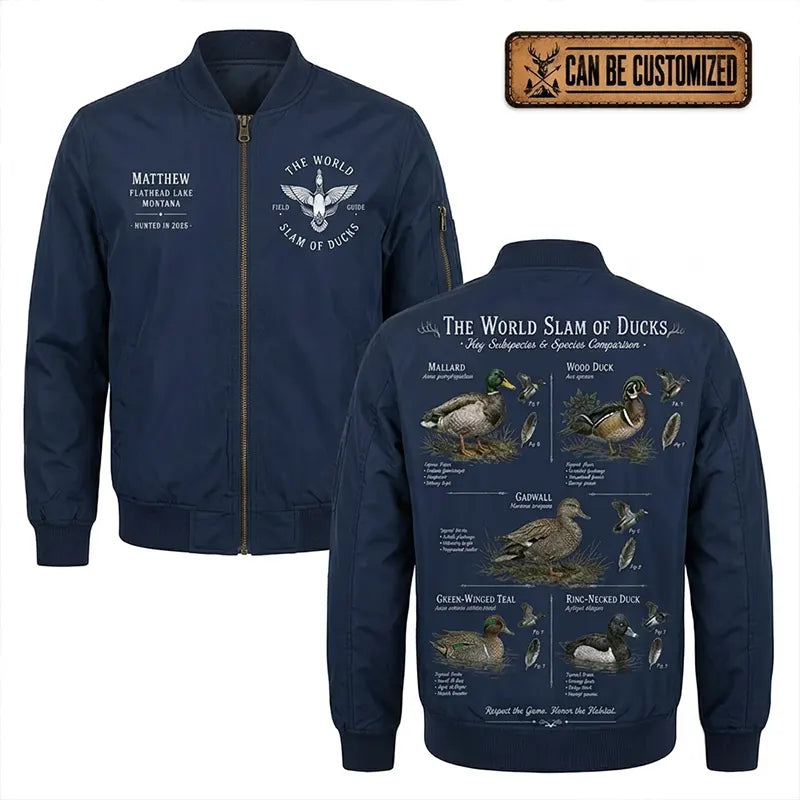
For hunters who want something unique beyond traditional hunting brands, consider Fathom Thread's The World Slam of Ducks Waterfowl Hunting Bomber Jacket - a personalized bomber that works great as a mid-layer under your technical shell or standalone for casual hunting trips and the drive to the ramp.

Duck Hunting Jacket Checklist
Before you buy, run through this quick checklist to make sure your next duck hunting jacket checks every box:
- ☐ Waterproof membrane - at least 10,000 mm hydrostatic head rating
- ☐ Breathable - MVTR of 5,000+ g/m²/24h to prevent sweat buildup
- ☐ Proper insulation - matched to your hunting season (light for early, heavy for late)
- ☐ Camo pattern - matches your specific hunting terrain (marsh, timber, snow)
- ☐ Adjustable hood - helmet-compatible if you use hearing protection
- ☐ Hand-warmer pockets - fleece-lined, positioned for sitting in a blind
- ☐ Shell call pockets - easy-access, close to chest level
- ☐ Durable face fabric - reinforced shoulders and elbows
- ☐ Quiet material - no loud nylon rustling that scares birds away
- ☐ Proper fit - room for layering without restricting movement
Style Meets Function: Beyond Traditional Hunting Gear
Not every hunting moment requires full tactical camo. For camp wear, travel to the blind, or casual outdoor days, there's a growing market of outdoor-themed apparel that bridges the gap. Check out Fathom Thread's World Slam of Ducks Waterfowl Hunting Sweater for cool-weather camp wear with personality, or the World Slam of Ducks Waterfowl Hunting Tank Top for warm early-season scouting days when a full jacket is overkill.
Final Thoughts: Invest in the Best Duck Hunting Jackets
A quality duck hunting jacket is one of the most important investments a waterfowler can make. It's not just about staying dry - it's about staying comfortable, focused, and in the blind long enough to limit out. Whether you choose a premium Sitka system, a reliable Drake workhorse, or layer up with affordable Avery gear, prioritize waterproofing, breathability, and proper insulation for your hunting conditions.
The best duck hunting jackets will serve you season after season, so buy right the first time. Study the conditions you hunt most, match your jacket to those conditions, and never compromise on quality when your comfort depends on it. Your future self - sitting warm and dry in a December blind - will thank you.