Trout Fishing Guide: How, When & Where to Catch Rainbow, Brown & Brook Trout
Trout fishing is one of the most accessible and rewarding forms of freshwater angling. Whether you're casting a line in a mountain stream on a Saturday morning or wading a tailwater for wild brown trout, the thrill of a trout rise never gets old.
This guide covers everything you need to know about catching the three most popular trout species: rainbow trout, brown trout, and brook trout.
Gear Up for Trout Season
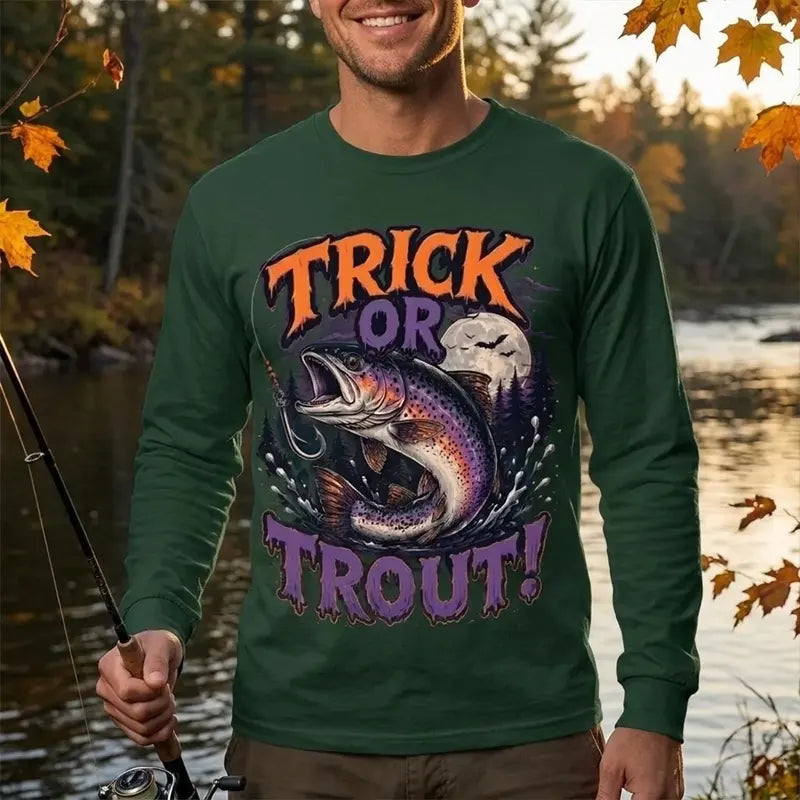
Personalized trout apparel with your name, home water, or coordinates - made to order, ships in 3-5 days.
Shop Trout Gear →Trout Species Overview
Rainbow Trout (Oncorhynchus mykiss)
The most widely stocked trout species in North America. Rainbow trout are aggressive feeders, acrobatic fighters, and found in nearly every cold-water fishery.
- Average size: 8-14 inches, 1-2 lbs
- Trophy class: 20+ inches, 5+ lbs
- World record: 48 lbs 0 oz (Lake Diefenbaker, Saskatchewan, 2009)
- Preferred water temp: 55-65°F (13-18°C)
- Habitat: Rivers, streams, lakes, reservoirs
Brown Trout (Salmo trutta)
The wiliest and most challenging of the common trout species. Brown trout are nocturnal feeders, highly selective, and notoriously difficult to fool. That's what makes them so rewarding.
- Average size: 10-20 inches, 1-4 lbs
- Trophy class: 25+ inches, 8+ lbs
- World record: 44 lbs 5 oz (Ohau Canal, New Zealand, 2020)
- Preferred water temp: 55-60°F (13-16°C)
- Habitat: Large rivers, tailwaters, lakes

Brook Trout (Salvelinus fontinalis)
Technically a char, not a true trout. Brook trout are the most beautiful of the trout family - olive-green bodies with red spots and a white-edged tail. They live in cold, clean mountain streams.
- Average size: 6-12 inches
- Trophy class: 16+ inches (2+ lbs)
- World record: 14 lbs 8 oz (Nipigon River, Ontario, 1916)
- Preferred water temp: 50-55°F (10-13°C)
- Habitat: Small mountain streams, spring-fed lakes
Best Time to Catch Trout - Month by Month
Spring (March - May): The Best Season
Spring is universally the best time to catch trout. As ice melts and water temperatures rise, trout come out of their winter lethargy and start feeding aggressively.
- March-April: Stocked trout are released by state agencies. These fish are eager to bite and easy to catch - perfect for beginners.
- April-May: The insect hatches begin. Caddis, mayflies, and stoneflies emerge, triggering surface feeding. This is prime fly fishing season.
- Water temperature: 45-55°F is the sweet spot. Trout are active but water is still cool enough to hold oxygen.
Best baits for spring trout: PowerBait (for stocked trout), salmon eggs, small spinners, flies (Pheasant Tail, Hare's Ear, Adams)
Summer (June - August): Early & Late
Summer trout fishing requires timing. As water warms, trout retreat to deeper pools, spring seeps, and shaded areas.
- Early morning (5:00 - 8:00 AM): The best window. Water is coolest and trout are actively feeding.
- Late evening (7:00 - 9:30 PM): Second window. Terrestrial insect activity peaks at dusk.
- Midday: Avoid it. Water temperatures above 70°F stress trout and shut down feeding.
Pro tip: In summer, target tailwaters below dams (cold water release) and spring-fed streams. These stay cold even in July heat. A brown trout long sleeve shirt with sun protection is essential - you'll be in direct sun on the water all day.
Fall (September - November): Big Fish Season
Fall is when trophy trout become catchable. Brown trout spawn in fall, making them aggressive and territorial. Rainbow trout feed heavily before winter.
- Brown trout spawn (September-November): Males turn orange-red and become highly aggressive. Streamers and large flies work best.
- Egg patterns: Trout eat fish eggs during spawning season. Egg-pattern flies and beads are incredibly effective.
- Fall streamer fishing: Big trout eat small fish in fall. Streamer fishing with Woolly Buggers and Sculpzillas produces the biggest trout.

Winter (December - February): Slow but Rewarding
Winter trout fishing is underrated. Fewer anglers on the water, and the fish that are biting are the smart ones.
- Slow presentations: Nymphing with small midge patterns (#18-22) is the most productive winter technique.
- Midday fishing: Fish during the warmest hours (11 AM - 3 PM) when water temperature peaks.
- Tailwaters: Dam-released water stays at a constant 40-50°F year-round. Winter tailwater fishing is excellent.
Where to Find Trout
Best Trout Water Features
- Deep pools: Trout hold in pools 3-8 feet deep, especially in slow-moving rivers
- Riffles: Oxygenated water over rocky bottoms - trout feed here during hatches
- Undercut banks: Brown trout love hiding under overhanging banks
- Log jams & boulders: Perfect ambush cover for trout
- Spring seeps: Cold water entering a warm stream concentrates trout
- Tailwaters: Below dams, water is cold and clear - world-class trout water
Top Trout Fishing Destinations
- Yellowstone River, Montana: Legendary wild brown and rainbow trout
- Madison River, Montana: Trophy rainbow trout fishery
- Bighorn River, Montana: Tailwater with massive rainbow and brown trout
- Delaware River, New York/Pennsylvania: Premier wild brown trout water
- South Platte River, Colorado: Gold Medal trout water near Denver
- White River, Arkansas: Trophy brown trout tailwater
- Firehole River, Wyoming: Unique thermal fishery inside Yellowstone

Best Bait & Lures for Trout
For Stocked Trout (Beginner-Friendly)
- PowerBait (trout dough): The #1 stocked trout bait. Mold a marble-sized ball on a treble hook, let it drift on the bottom. Works everywhere trout are stocked.
- Salmon eggs (real or artificial): Trout love eggs. Use a #16 hook and a split shot to get it to the bottom.
- Worms (nightcrawlers, red wigglers): Classic trout bait. Use a single hook and float it under a bobber.
- Marshmallows: Surprisingly effective for stocked trout. Float them with a tiny split shot.
For Wild Trout (Intermediate to Advanced)
- Small spinners (Rooster Tail, Mepps, Panther Martin): The most versatile trout lure. Cast upstream and let it swing down.
- Spoons (Kastmaster, Little Cleo): Great for trout in lakes. Cast and retrieve with a stop-and-go action.
- Flies (dry flies): Adams (#14-16), Elk Hair Caddis (#14-16), Parachute Adams (#16-18)
- Flies (nymphs): Pheasant Tail (#16-18), Hare's Ear (#14-16), Zebra Midge (#18-22)
- Flies (streamers): Woolly Bugger (#4-8), Sculpzilla (#4), Matuka (#6-10)

Trout Fishing Techniques That Work
1. Float Fishing (Still Fishing)
The simplest way to catch trout, especially stocked trout. Set up a bobber 2-3 feet above your bait, cast into a pool, and wait. When the bobber dips or goes under - set the hook.
2. Drift Fishing (Bottom Bouncing)
Let your bait or fly drift naturally along the river bottom. Use enough weight to keep your offering in the strike zone (just above the rocks), but not so much that you're constantly snagging.
3. Fly Fishing
For wild trout, fly fishing is the most effective - and the most fun. Match the hatch: if you see insects on the water, use a fly that imitates them. If not, nymph under the surface where 90% of a trout's diet lives.
4. Spinning with Lures
Casting small spinners and spoons covers water fast. Work upstream to downstream, casting across the current and letting the lure swing. When trout are active, this method produces quickly.
Essential Trout Fishing Gear
Beginner Setup
- Rod: 5-6 foot ultralight spinning rod
- Reel: 1000-2000 size spinning reel
- Line: 4-6 lb monofilament
- Bait: PowerBait, salmon eggs, or worms
Intermediate Setup
- Rod: 6-7 foot light/medium spinning rod
- Reel: 2000-2500 size
- Line: 4 lb fluorocarbon leader (trout see thick line in clear water)
- Lures: Assorted spinners (1/16 to 1/8 oz), spoons
Fly Fishing Setup
- Rod: 9 foot 5-weight fly rod (the most versatile trout rod)
- Reel: 5-weight with smooth drag
- Line: Weight-forward floating line (WF5F)
- Leader: 9-foot tapered leader, 4X or 5X tippet
- Flies: Assorted dry flies, nymphs, and streamers (see above)
Footwear: Wading Boots on the Water, Fishing Flip Flops Off It
Wading boots or cleated felt soles do the job once you're in the current, but the second you're back at the truck or setting up camp, they're overkill - and walking around a wet parking lot or riverside campsite in stocking feet gets old fast. A lot of trout anglers keep a pair of fishing flip flops in the truck specifically for that changeover: rinse off, swap out of the waders, and let your feet breathe while you rig up for the next run or break down camp.
If you're picking a pair, our fish flip flops slippers guide covers the tread and sole features that actually hold up on wet rocks and boat ramps near tailwaters. And for stream-side style that matches the rest of your trout kit, check the fishing slippers color-coordination guide.

Common Trout Fishing Mistakes
- Using line that's too heavy: Trout have excellent vision. In clear water, 6+ lb line is visible. Use 2-4 lb fluorocarbon for wild trout.
- Moving too fast in shallow water: Trout see your shadow and silhouette from below. Approach pools from downstream and stay low.
- Fishing the wrong depth: 90% of trout feeding happens within 1 foot of the bottom. If you're not getting bites, go deeper.
- Ignoring insect activity: If you see fish rising or insects hatching, switch to a matching fly immediately. This is when trout feed most aggressively.
- Overpowering the fish: Trout on light line fight hard but tire quickly. Keep steady pressure and don't rush to land them.

Just A Guy Bad At Fishing Embroidered Cap - $29.99 - for when you make a few of these mistakes anyway.
Trout Fishing Regulations
Trout regulations vary by state and water body. Common regulations include:
- Catch-and-release only: Many wild trout waters are C&R to protect native populations
- Artificial lures only: Some streams allow only artificial flies and lures (no bait)
- Daily bag limit: 2-5 trout per angler on stocked waters
- Minimum size: 8-12 inches in most states
- Special regulations: Some waters have slot limits (e.g., only keep trout between 10-14 inches)
Always check your state's fishing regulations before heading out. A fishing license is required in all states.
Trout Fishing FAQs
What is the best bait for trout?
For stocked trout: PowerBait is the most effective and easiest bait. For wild trout: small nymphs (#18-22) fished under the surface are the most reliable. For an all-around lure: a 1/16 oz Rooster Tail spinner works in almost any trout water.
What time of day is best for trout fishing?
Early morning (dawn to 9 AM) and late evening (dusk) are best. Trout feed most actively in low light. On overcast days, they'll feed throughout the day.
Can you catch trout in winter?
Yes! Winter trout fishing is excellent on tailwaters below dams where water stays at a constant 40-50°F. Use small nymphs and midge patterns and fish during the warmest part of the day.
How do I know if a stream has trout?
Look for: clear, cold water (under 70°F), rocky bottoms with riffles and pools, insect activity on the surface, and signs of fish feeding (rises). Check your state's fish stocking reports - if a stream is stocked, it has trout.
Can I wear flip flops for trout fishing?
Not while you're actually wading - felt-soled or rubber-cleated wading boots give you far better grip and ankle support on slick streambed rocks. But once you're out of the water, a pair of fish flip flops is a comfortable, quick-drying option for the drive home, the campsite, or walking the bank between runs.
Wrap Up: The Simple Joy of Trout Fishing
Trout fishing doesn't require expensive gear or a boat. All you need is a light spinning rod, some bait, and access to a cold stream. Whether you're catching your first stocked rainbow or fighting a wild brown trout on a fly rod, the experience is timeless.
Rep Your Trout Passion On the Water and Off
Personalize with your name, home stream, or coordinates - made to order, ships in 3-5 days.
Shop the Brown Trout Long Sleeve Shirt →Check out the full trout collection - perfect for anglers who love cold-water fishing and want to show their trout pride anywhere from the stream to the trail.